A well-designed store, office or hotel uses several types of lighting fixtures: one provides basic illumination, another highlights the product or function, and the third shapes the working atmosphere. Understanding different types of commercial lighting can help buyers choose the right lamps for each area.
This guide explains the main types of commercial lighting, with a focus on three widely used lighting fixtures: recessed downlights, track lights and linear office lights. It covers the functions of each type, where it works best, and how to combine them in actual projects.
Every commercial space requires three layers of light, and no single lamp can cover all three layers.
Recessed downlights usually handle the environmental layer, track lights handle the key layer, and linear office lights handle the task layer and decorative layer. Combining them will produce a balanced and professional result.
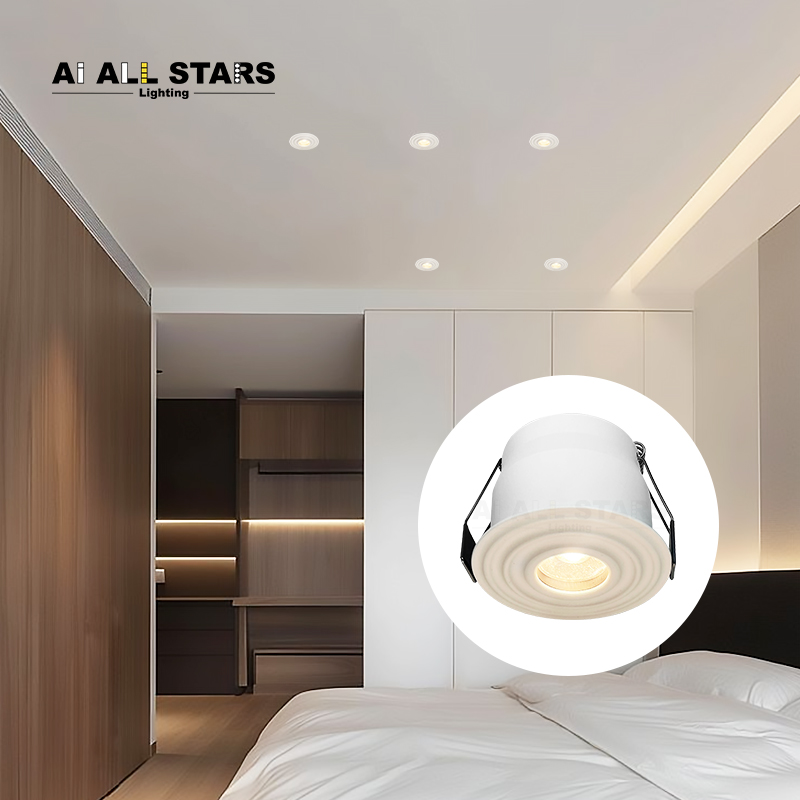
Recessed downlights are small LED lamps installed on the ceiling. They are almost hidden, providing soft and even base light for the entire room.
What they do: Provide uniform ambient light without messy ceilings. Modern recessed downlights use deep baffles or honeycomb grids to control glare, and many are dimmable.
Suitable places: guest rooms, hotel corridors, bathrooms, backstage areas, retail ceilings, offices, and any space that requires clean, quiet basic lighting.
Main advantages: Smooth ceiling appearance, uniform coverage, low glare, easy installation, and low maintenance during long-term operation.
The track lights run along the tracks installed on the ceiling or above the ceiling. The adjustable lamp slide along the tracks and point in different directions.
What they do: Provide flexible accent and focus lighting. Lamp heads can be moved, added or re-aimed as displays and layouts change, without rewiring.
Suitable places: Retail stores, clothing shops, galleries, showrooms, restaurants, jewelry displays, artwork walls and reception feature walls.
Main advantages: Directional beams, adjustable angles, easy reconfiguration, high CRI for true product colors, and the ability to highlight exactly what should be seen.
Linear office lights are LED chandeliers suspended in long strips, square rings, hexagons or custom geometric shapes. They are suspended from the ceiling, integrating task lighting with the ceiling design.
What they do: To provide bright and even light on desks, counters and corridors, while creating modern architectural ceiling patterns.
Suitable places: Open-plan offices, meeting rooms, lobbies, supermarkets, retail aisles, shopping malls and exhibition halls.
Main advantages: Seamless splicing continuous lines, multiple styles, high-efficiency chips, easy installation, OEM/ODM customization to match project layout.
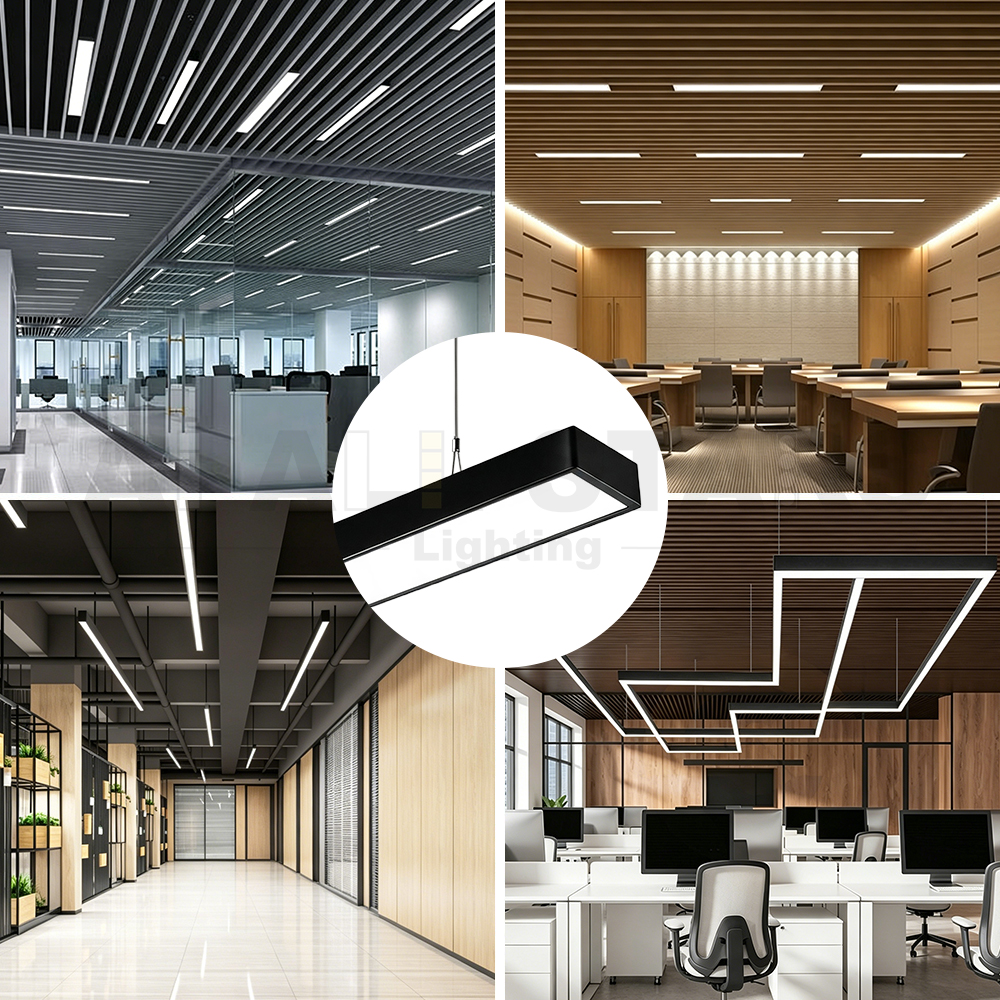
In actual projects, these three types work together. The following are their typical combinations.
Use recessed downlights to evenly illuminate the entire sales floor. Track lights on shelves, hangers and ceilings highlight products and colors. Use linear office lights in long aisles or checkout areas to achieve bright and uniform task lights.
Linear office lights are used above the work area for task lighting and modern ceiling decoration. Recessed downlights are used in private offices and corridors as a calming base light. Track lights are used in the reception area, meeting rooms and feature walls to highlight the brand and artworks.
Built-in downlights are used to create a quiet and even base light, track lights are aimed at the artworks and the reception function wall, and decorative chandeliers above the hall create a high-quality first impression.
Use track lights above the table as the main emphasis layer, embedded downlights as soft environmental fillers, and linear pendants or rings above the central table or display island as decorative focal points.
Different types of commercial lighting each play a unique role: recessed downlights provide uniform ambient light, track lights offer flexible focus points, and linear office lights combine task lighting with modern ceiling designs. Select the appropriate type for each area to create a balanced, comfortable and professional commercial interior.


